Key takeaways
- The UAE virtual work visa lets you live in the UAE for one year, renewable, while working remotely for an employer, client base, or business based outside the country.
- The official minimum income is USD 3,500 a month. Since a January 2026 joint ICP and GDRFA circular took full effect, business owners applying through the route face a higher USD 5,000 a month bar, six months of bank statements instead of three, and mandatory health insurance cover of AED 500,000 rather than AED 150,000.
- Dubai applications go through GDRFA. Every other emirate goes through the federal ICP.
- The visa fee itself is AED 200 plus 5% VAT, though total costs rise once medical insurance, typing centre fees, and Emirates ID are added.
- You cannot take local UAE employment on this visa. It is strictly for income earned outside the country.
The UAE virtual work visa, officially the UAE Virtual Working Programme, lets remote employees, freelancers, and business owners live in the UAE for up to a year while their income keeps coming from outside the country. It has been available since October 2020, but 2026 brought the first real tightening of the rules since launch, and a lot of the guidance circulating online has not caught up. This guide covers who actually qualifies in 2026, what changed in January, the documents you need, and what the whole process costs from application to Emirates ID.
What the virtual work visa actually is
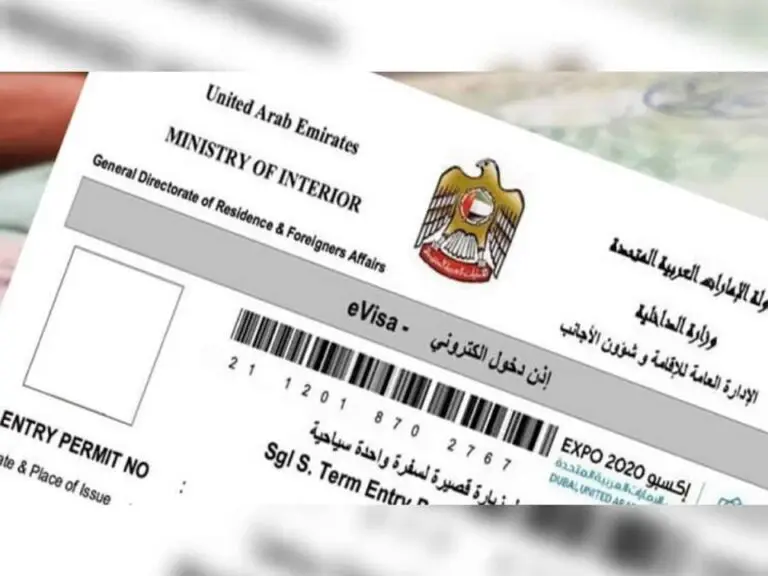
The virtual work visa grants a residence permit without local employment. You are not on any UAE company’s payroll and you are not permitted to work for a UAE-based employer or client. Instead, you prove that your income comes from an entity or clients outside the country and that the work itself is performed remotely. In return, you get a UAE residence visa valid for one year and renewable, and you can sponsor your spouse and children for the same period.
Who can apply: employees, freelancers and business owners
Three categories can apply. Employees who work remotely for a foreign employer, freelancers who bill foreign clients directly, and business owners who run a company registered outside the UAE. All three need to show the work is genuinely remote and the income is genuinely foreign. The category you fall into now matters more than it used to, because the income bar is no longer the same for everyone, which is covered next.
The income requirement, and the 2026 tightening
The baseline requirement, as published on GDRFA’s own service page, is a monthly income of no less than USD 3,500 or the equivalent in another currency. That figure has applied since the programme launched and still applies to employees applying through the standard route.
What changed is the treatment of business owners. Multiple immigration and visa-industry sources report that a joint circular from the Federal Authority for Identity, Citizenship, Customs and Port Security (ICP) and Dubai’s GDRFA, issued in January 2026, came fully into force with three changes for this category: the income floor for business owners rose to USD 5,000 a month alongside proof of at least one year of company ownership, the bank statement window doubled from three months to six months of continuous inflow, and mandatory health insurance cover increased from AED 150,000 to AED 500,000 per person. Self-declared income letters are also reported to no longer be accepted on their own; ownership and income evidence now needs to be legalised or apostilled abroad and then attested in the UAE. Because this detail comes from immigration-industry reporting rather than an updated public GDRFA or ICP consumer page at the time of writing, treat the specific figures as a strong signal of current practice and confirm your own case with a typing centre or immigration adviser before applying.
Employees applying with a foreign salary appear to remain at the USD 3,500 threshold based on the current official GDRFA listing. If your income sits close to either line, it is worth getting written confirmation of your exact category before you gather documents.
Documents you need to prepare
- A recent colour photo on a white background.
- A passport valid for at least six months.
- Evidence that you work for an entity outside the UAE, or that your freelance or business income is foreign, and that the work is done remotely.
- Bank statements proving your income, six months’ worth is the safer bar to prepare given the 2026 tightening for business owners.
- Proof of company ownership of at least one year, if you are applying as a business owner.
- A valid health insurance policy. Compare providers in our roundup of the best health insurance companies in the UAE before you buy, since cover levels and prices vary widely between insurers.
The step-by-step process: GDRFA versus ICP
Where you apply depends on where you plan to live. Dubai applications go through GDRFA’s own smart services channel. Every other emirate goes through the federal ICP, under Interactive Services, using the Virtual Work Residence service. Broadly the process is the same in both cases:
- Apply online. Log in with UAE Pass or a registered account, select the virtual work residence service, and complete the application with your personal and income details.
- Upload your documents. Passport copy, photo, income evidence, and health insurance.
- Pay the fee and submit.
- Receive your entry permit and, once in the UAE, complete any remaining steps such as an Emirates ID appointment.
GDRFA lists an expected completion time of 48 hours once a file is complete, though real-world processing for a full file with all attestations often runs closer to five to seven business days. ICP quotes a similar short turnaround once the application is submitted correctly.
What it costs in 2026
The visa fee itself is modest: AED 200 plus 5% VAT for the visa issuance according to GDRFA’s published fee schedule, with additional charges of AED 10 Knowledge Dirham, AED 10 Innovation Dirham, and an AED 500 in-country fee if you are converting status from inside the UAE. The bigger cost driver is health insurance, since the tightened AED 500,000 cover requirement for business owners is a materially higher policy tier than a basic resident plan. Add a realistic allowance for document attestation if any of your income or ownership evidence originates outside the UAE, since legalisation and attestation fees add up quickly and are easy to underestimate.
Virtual work visa versus freelance permit versus Golden Visa
The virtual work visa is not the only route into the UAE without a local employer. If your income is not exclusively foreign, or you want to bill UAE-based clients too, a UAE freelance permit is the better fit, since it lets you work legally inside the local market. If you already qualify for long-term residency through property, investment, or specific professional criteria, the UAE Golden Visa offers a longer, ten-year term with fewer ongoing income checks. And if you are simply deciding where to base yourself day to day once you arrive, our list of the best places to work remotely in Dubai is worth a look before you commit to a home office or a coworking membership.
Common mistakes to avoid
Assuming the USD 3,500 figure applies to everyone is the most common mistake right now. If you are applying as a business owner, budget for the USD 5,000 threshold and the higher insurance cost rather than being caught out mid-application. Submitting only three months of bank statements is the second common issue, since six months is now the safer standard to prepare regardless of category. Relying on a self-written income letter without attestation is the third, and it is the one most likely to cause a rejection under the tightened rules. Finally, remember you cannot open local UAE employment on this visa. If your plans include even part-time local work, you also need to open a UAE bank account and look at a different visa category entirely.
Frequently asked questions
Can I sponsor my family on a UAE virtual work visa?
Yes. The visa’s terms allow you to sponsor your spouse and children for the same one-year, renewable period as your own residence.
Do I need a UAE company to apply?
No. The entire point of the visa is that your employer, clients, or business are based outside the UAE. Holding a UAE company would put you outside the programme’s requirements.
How long does the UAE virtual work visa last?
One year from issuance, and it can be renewed if you continue to meet the income and insurance requirements at the time of renewal.
Is the income requirement the same for everyone in 2026?
Not based on current reporting. Employees are reported to remain at USD 3,500 a month. Business owners face a higher USD 5,000 a month bar following the January 2026 circular, plus proof of at least one year of company ownership.
Can I work for a UAE client while on this visa?
No. The visa is specifically for people whose income is earned outside the UAE. Taking on local UAE work or employment falls outside its terms.
Where do I apply if I plan to live outside Dubai?
Through the federal ICP rather than GDRFA. GDRFA only covers Dubai; every other emirate’s applications go through ICP’s Interactive Services.
For the official requirements and current fees, see GDRFA’s Visa Issuance (Virtual Work) page for Dubai, or ICP’s Virtual Work Residence service for other emirates.