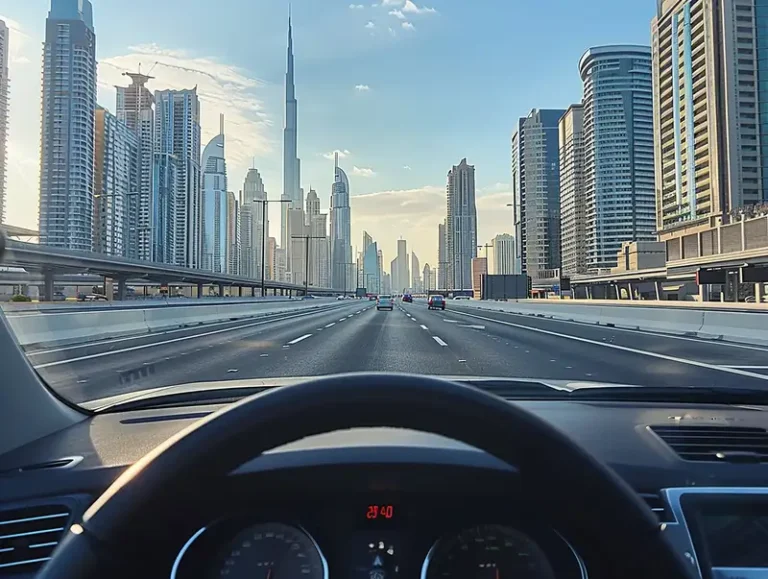
Navigating Dubai’s transportation ecosystem efficiently is one of the most critical factors in managing your daily operational budget and ensuring long-term financial sanity. While the city boasts an incredibly advanced, world-class multi-modal transit network, the real costs of physical movement can quickly add up if you do not understand the underlying tariff structures, dynamic pricing windows, and structural toll frameworks.
This master guide strips away all generic travel commentary and marketing fluff to provide a completely transparent, data-driven look at the exact cost mechanics of getting around Dubai in 2026. Whether you are daily commuting via public transit, navigating the recently overhauled dynamic road toll systems, planning inter-emirate rail trips on Etihad Rail, or managing global aviation logistics across the emirate’s flight hubs, we break down every essential expense column for your monthly ledger.
Table of Contents
- 1. Dubai Metro & Public Transport (Nol Card Framework)
- 2. Road Tolls (Salik Gate Dynamic Framework)
- 3. Public Parking Tariffs (Parkin Framework)
- 4. Inter-Emirate Rail Network (Etihad Rail Passenger Framework)
- 5. Aviation Hubs & Flight Logistics (DXB & DWC)
- 6. Commercial Taxis & On-Demand Ride-Hailing Framework
1. Dubai Metro & Public Transport (Nol Card Framework)
Dubai’s public transport network—including the Dubai Metro, Dubai Tram, RTA public feeder buses, and marine water taxis, operates via a unified, contactless electronic ticketing medium called the Nol Card. Physical cash payments are completely phased out across the network. Fares are derived strictly based on a geographic zone tiering structure, where the emirate is segmented into 7 distinct transport zones. Your total transit cost is calculated solely by the number of unique zones you cross during a single continuous journey.
Commuters choose between four primary types of Nol cards based on their frequency of travel and preferred cabin tier:
- Silver Card: The standard consumer card for regular commuters. Features a low initial acquisition cost and provides access to standard class cabins.
- Gold Card: A premium tier card that charges exactly double the standard Silver fare. It grants exclusive access to the specialized, carpeted Gold Class cabins located at the front or rear ends of the metro trains.
- Blue Card: A personalized, secure smart card linked directly to your Emirates ID. It offers protection against card loss and unlocks a 50% discount for students, senior citizens, and people of determination.
- Red Ticket: A paper-based, single-use or multi-day ticket designed primarily for temporary tourists or infrequent users who do not require a permanent e-wallet balance.
| Journey Tier Scope | Silver Card Fare | Gold Card Fare | Blue Card (Standard) | Red Ticket (Single) |
|---|---|---|---|---|
| Tier 1: Within 1 Single Zone (or transit distance less than 3 km) | AED 3.00 | AED 6.00 | AED 3.00 | AED 4.00 |
| Tier 2: Crossing 2 Adjacent Transport Zones | AED 5.00 | AED 10.00 | AED 5.00 | AED 6.00 |
| Tier 3: Crossing More Than 2 Transport Zones | AED 7.50 | AED 15.00 | AED 7.50 | AED 8.50 |
| Daily Fare Cap | AED 14.00 (Unlimited) | AED 20.00 (Unlimited) | AED 14.00 (Unlimited) | No Cap Available |
For daily public transport commuters, the RTA offers highly structured travel passes designed to limit lifestyle creep. A 30-day all-zones Silver Pass costs AED 350, providing completely unlimited travel across the entire metro, tram, and bus networks. This pass instantly caps your monthly commuting costs if you travel long distances regularly (e.g., from Al Nahda or Deira down to Dubai Marina or Dubai Internet City).
To maximize this system, you must adhere strictly to the Critical Transfer Regulations: Commuters are permitted up to 3 distinct transit mode switches (such as stepping off a Metro train and boarding a connected RTA Public Feeder Bus) within a single journey without incurring a secondary base charge. However, the maximum transfer window between subsequent tap-outs and tap-ins must be strictly less than 30 minutes, and the entire multi-mode journey must be completed within 180 minutes total duration.
2. Road Tolls (Salik Gate Dynamic Framework)
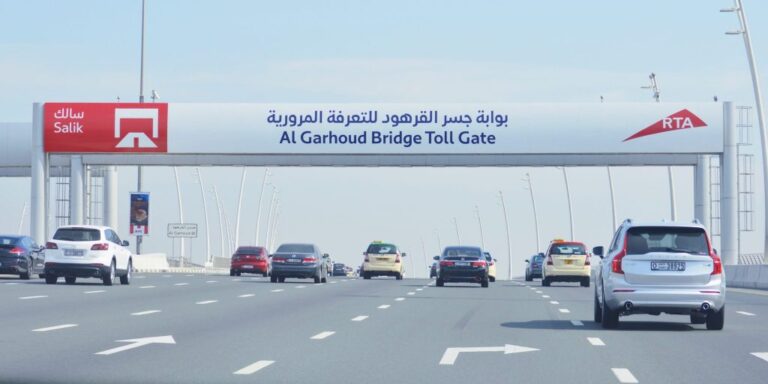
If you choose to navigate the city via vehicle ownership or long-term leasing, road tolls represent a highly structured, recurring expenditure line item. Dubai’s automated road toll mechanism, known as Salik, eliminates physical toll booths entirely, utilizing passive RFID transponder tags affixed directly to vehicle windscreens. Toll billing structures across all active gates run on an automated pre-paid e-wallet account linked to your vehicle license plate.
Following comprehensive system overhauls designed to regulate urban congestion along major transit arteries, Salik operates on a strict time-of-day dynamic pricing framework. Furthermore, all stated values include the 5% VAT adjustments implemented across the state’s transport grids.
| Time Window Category | Active Operational Hours | Tariff Per Individual Crossing (With 5% VAT) |
|---|---|---|
| Peak Traffic Window | 06:00 AM – 10:00 AM & 04:00 PM – 08:00 PM (Monday to Saturday) | AED 6.30 |
| Off-Peak Standard Window | 10:00 AM – 04:00 PM & 08:00 PM – 01:00 AM (Monday to Saturday) | AED 4.20 |
| Sunday Standard Tier | 06:00 AM – 01:00 AM (Sundays Flat Rate) | AED 4.20 |
| Free Overnight Window | 01:00 AM – 06:00 AM Daily (All Active Gates) | AED 0.00 |
Active gate configurations span key commercial block paths, including Al Barsha, Al Safa, Al Maktoum Bridge, Al Garhoud Bridge, Mamzar (North and South), Airport Tunnel, and the recently integrated toll zones at Al Khail Road and Sheikh Zayed Road extensions. A critical aspect of budgeting for vehicle travel is ensuring your pre-paid Salik wallet balances do not drop below zero. Failure to maintain a positive balance results in an administrative grace window of exactly 5 working days. If the account is not topped up within this period, a dedicated government fine of AED 50.00 per individual gate crossing is issued directly against your traffic file numbers.
3. Public Parking Tariffs (Parkin Framework)
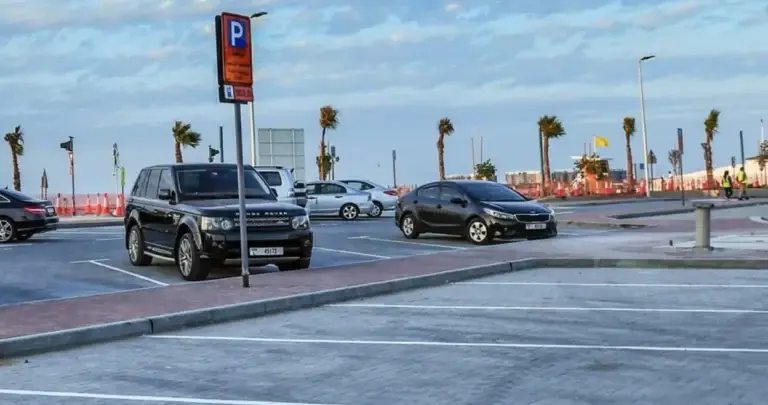
Public parking assets throughout Dubai are regulated under a tiered, dynamic architecture managed by Parkin. Structural rates are dictated heavily by geographic classification (Premium commercial cores versus Standard residential districts) and physical layout configurations (On-Street curb spaces versus Off-Street multi-level parking lots). All baseline tariffs listed below embed the mandated 5% VAT and require digital validation.
Physical cash payments at meters are phased out entirely. Motorists register their parking sessions by sending an SMS formatted with their plate details and zone code to the short-code 7275 (PARKIN), by utilizing the official smartphone application, via Apple Pay, or by scanning physical Nol cards directly at terminal kiosks.
Category A: Premium Zones (Downtown Dubai, Business Bay, SZR, Dubai Marina)
These zones feature high utilization rates and dense vertical environments. On-street curb spaces are strictly limited to prevent long-term stagnation:
- Peak Hours (08:00 AM – 10:00 AM & 04:00 PM – 08:00 PM): AED 6.30 per hour
- Off-Peak Standard Hours (10:00 AM – 04:00 PM & 08:00 PM – 10:00 PM): AED 4.20 per hour
- Fractional / Short Stays: AED 2.10 flat rate per 30 minutes (Available exclusively via smart app validations)
- Maximum Parking Allotment Cap: Continuous on-street parking is legally restricted to a maximum of 4 consecutive hours in Category A zones to ensure rapid consumer turnover metrics.
Category B: Standard Zones (Al Barsha, Al Nahda, Karama, Deira, Bur Dubai)
These zones comprise wider residential and community commercial layouts. They offer flexible long-term parking alternatives at a lower per-hour footprint:
- Peak Hours (08:00 AM – 10:00 AM & 04:00 PM – 08:00 PM): AED 4.20 per hour
- Off-Peak Standard Hours (10:00 AM – 04:00 PM & 08:00 PM – 10:00 PM): AED 2.10 per hour
- Multi-Hour Flat Rate Discount: AED 12.60 flat rate for an unbroken 4-hour consecutive session block.
- Off-Street Multi-Level Lots: Feature a flat rate of AED 3.00 per hour or AED 15.00 for a comprehensive 24-hour continuous vehicle storage allotment.
Note: Standard public parking zones across the emirate feature free operational status on Sundays and designated official state public holidays. Late-night parking sessions from 10:00 PM to 08:00 AM remain completely untariffed across standard non-enclosed configurations.
4. Inter-Emirate Rail Network (Etihad Rail Passenger Framework)
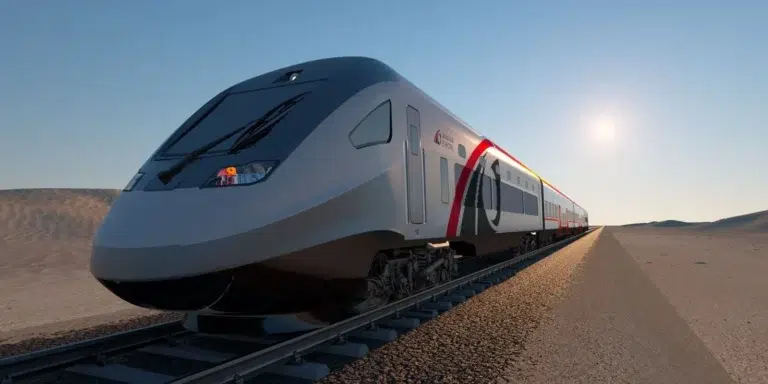
The UAE National Rail Network, designed and operated by Etihad Rail, represents a monumental shift in the country’s transport layout. Utilizing a state-of-the-art regional passenger fleet operating at advanced top speeds of up to 200 km/h, the network connects critical economic, industrial, and residential hubs across all seven emirates. For commuters and professionals traveling frequently between Dubai, Abu Dhabi, and the Northern Emirates, the rail service provides a highly structured alternative to long highway commutes.
A. Regional Phased Rollout Schedule
Passenger logistics and scheduled operations follow a strict, multi-phase system integration architecture to guarantee complete mechanical and network security stability:
| Operational Phase Name | System Launch Milestone Date | Primary Connected Hub Locations & Corridors |
|---|---|---|
| Introductory Service Phase | June 30, 2026 | Abu Dhabi Central Terminal (MBZ City) & Fujairah Main Line Hub |
| Official Public Network Launch | September 30, 2026 | Dubai Central Hub (Jumeirah Golf Estates) & Al Dhaid Sharjah Terminal |
| Western Region Integration | December 30, 2026 | Al Dhafra Logistics Terminals (Al Sila, Al Mirfa, Madinat Zayed) |
| Complete System Completion | March 30, 2027 | Sharjah Central Passenger Station & Northern Emirates Integration Loop |
B. Cabin Configuration & Fare Classes
The passenger fleet implements distinct structural class tiers engineered to meet varying customer preference metrics. To incentivize initial community onboarding, launch promotional structures drop the standard baseline mature fares by precisely 50% across all early operation blocks:
| Cabin Tier Classification | Onboard Amenities & Layout Scope | Launch Promotional Fare | Standard Mature Base Fare |
|---|---|---|---|
| Comfort Class | 2+2 ergonomic seating profile, guaranteed forward-facing configuration options, ample overhead baggage storage, integrated in-seat USB and power arrays, complimentary basic high-speed Wi-Fi access. | AED 55.00 | AED 109.00 |
| Premium Class | 1+2 wider executive leather reclining layouts, extended legroom footprint, dedicated silent workspace zones, complimentary curated cold culinary adjustments, priority fast-track terminal lounge admittance. | AED 120.00 | AED 239.00 |
C. Ticket Tier Flexibility Specifications
To avoid corporate budget friction, tickets are structured into three distinct flexibility parameters:
- Saver Tickets: The absolute lowest cost entry point. Designed exclusively for fixed travel schedules; modifying itinerary dates or requesting monetary refunds is structurally prohibited. Sourced solely through advanced digital platform bookings.
- Value Tickets: Provides moderate itinerary control. Includes complimentary advanced seat allocation preferences and permits a single baseline booking date adjustment up to 48 hours prior to scheduled station departures without penalty.
- Flex Tickets: Ultimate tactical travel control. Unlocks completely free, unlimited itinerary scheduling modifications, condition-based cash refund allowances in the event of cancellation, and direct passenger name ownership transfers prior to departure.
D. Key Net Transit Time Parameters
By bypassing historic highway blockages and urban road traffic constraints, Etihad Rail drastically reduces inter-city transit timelines:
- Abu Dhabi Central Hub ↔ Dubai Central Hub: 57 minutes net travel time.
- Dubai Central Hub ↔ Fujairah Terminal: 69 minutes net travel time.
- Abu Dhabi Central Hub ↔ Fujairah Terminal: 105 minutes net travel time.
5. Aviation Hubs & Flight Logistics (DXB & DWC)
Dubai functions as a premier global aviation capital, anchored by two massive, distinct airfield operations managed by Dubai Airports: Dubai International (DXB), which retains its position as the world’s busiest hub for international passenger traffic, and Al Maktoum International (DWC) at Dubai South, which is scaling dynamically under a comprehensive master plan to become the world’s largest cargo and commercial flight node.
A. Infrastructure & Multi-Modal Transit Integration
Navigating between these massive hubs and the urban core requires an understanding of their terminal layouts and direct public infrastructure links:
| Aviation Hub Profile | Terminal & Concourse Layout | Primary Dedicated Carriers | Integrated Public Transit Access |
|---|---|---|---|
| Dubai International (DXB) | Terminals 1, 2, and 3. Concourses A, B, and C feed directly into T3; Concourse D connects with T1 via an automated elevated people mover. | Emirates Airline and flydubai hold dominant hubs at T3 and T2 respectively. Over 100 legacy global flag carriers operate out of T1. | Direct station connections on the Dubai Metro Red Line located at Terminal 1 and Terminal 3. Round-the-clock RTA public express bus lines service all arrivals fields. |
| Al Maktoum International (DWC) | Single integrated passenger terminal layout currently operational; masterplan scaling to 5 parallel runways featuring ultimate multi-concourse links. | Strategic global cargo operations, seasonal charter holiday fleets, and regional ultra-low-cost carriers. | Dedicated RTA Express Shuttle Buses link directly to Ibn Battuta Metro Station. Future infrastructure designs feature direct Etihad Rail passenger terminal nodes. |
B. Airport Access & Ground Transportation Surcharges
Due to specific municipal airport transport regulations, ground transport hailing services originating directly from airport arrival terminals carry fixed base surcharges added automatically over standard metered distances:
- Official RTA Airport Taxi Fleet: All standard taxi pickups originating from the dedicated arrival taxi ranks at DXB or DWC feature a fixed, mandatory base flag-fall starting from AED 25.00 flat rate. Subsequent mileage accumulation tracks at the standard regulated fare of AED 2.19 per kilometer.
- Commercial Ride-Hailing Apps (Uber / Careem): Private vehicle pickups from airport terminal geo-fenced boundaries carry a baseline airport access toll premium ranging between AED 20.00 and AED 22.00, appended automatically over standard base corporate tariffs.
- Inter-Terminal Shuttle Connection: Commuters and transit passengers needing to shift between Terminal 1 and Terminal 3 can utilize the continuous Dubai Metro link completely free of charge, provided they present a valid onward flight boarding pass to station attendants.
C. Short-Term Terminal Parking Structures
If you are dropping off or picking up passengers, short-term parking lots located nearest to the primary arrival halls utilize a strict, escalating hourly fee profile engineered to prevent terminal bottlenecking:
| Parking Lot Profile (DXB Terminals 1 & 3) | Initial 1-Hour Step | 2-Hour Cumulative Tier | 24-Hour Maximum Daily Cap |
|---|---|---|---|
| Premium Car Park (Car Park A – Minimal Walking Distance) | AED 30.00 | AED 40.00 | AED 125.00 per day |
| Economy Car Park (Car Park B – Standard Walking Distance) | AED 25.00 | AED 35.00 | AED 85.00 per day |
6. Commercial Taxis & On-Demand Ride-Hailing Framework
For immediate point-to-point transit that bypasses the fixed corridors of the metro lines, Dubai features an incredibly dense network of on-demand commercial vehicles. This transit network is clearly split into government-regulated municipal metered fleets and private app-based technology networks. Understanding how these platforms calculate fares is vital to avoiding lifestyle creep.
The standard municipal fleet—identifiable by their uniform cream-colored sedan bodies and distinct colored roofs (signifying separate operating franchises)—runs strictly under public RTA guidelines. These vehicles can be flagged down directly from the street or booked digitally via the Careem app using the Hala Taxi booking option. Private networks like Uber or Careem Select utilize high-end luxury vehicle profiles (primarily Lexus ES or Tesla Model 3/Y configurations) and operate under a distinct corporate premium.
| Transit Fleet Tier Classification | Base Flag-Fall (Standard Daytime) | Base Flag-Fall (Peak / Overnight Bookings) | Distance Metric Tariffs |
|---|---|---|---|
| Standard RTA Taxi / Hala Careem Service | AED 5.00 (Street Hail) / AED 8.00 (Standard App Dispatch) | AED 5.50 (Street Hail) / AED 12.00 (Peak Rush & Night Windows) | AED 2.19 per subsequent km travelled |
| Uber Executive / Careem Premium Fleet | AED 8.00 fixed minimum base rate | AED 15.00 dynamic minimum base rate | Carries a flat 25% to 30% premium overhead across all equivalent RTA distances |
A critical operational factor to monitor is the Automatic Salik Surcharging protocol: Whenever a commercial taxi or private ride-hailing vehicle crosses an active Salik gate during a customer trip, the toll amount is dynamically added onto the vehicle’s taximeter fare automatically. The toll is passed directly to the passenger’s final bill at a standard flat rate of AED 4.00 per gate crossing, completely independent of whether the toll gate was operating on peak or off-peak pricing structures for private vehicles.
Furthermore, app-based private networks utilize dynamic surge algorithm modifiers during severe weather events or high-density regional exhibitions (such as COP conferences or Dubai World Trade Centre conventions), which can instantly escalate base costs by up to 2.5 times the standard tariff. Sourcing a street-hail RTA taxi or walking directly to a dedicated hotel taxi rank during peak hours remains a reliable way to bypass these private platform price spikes.
7. Inter-Emirate & Cross-Border Bus Networks
For destinations not yet fully integrated into the early operational phases of the national rail network, regional and international physical transit is efficiently managed via highly structured public and private coach networks.
A. Inter-Emirate Public Bus Fleet (RTA Shared Grids)
The Roads and Transport Authority (RTA) runs continuous inter-city bus routes connecting Dubai directly to neighboring emirates. These coaches originate from key municipal transport hubs including Al Ghubaiba Bus Station, Union Bus Station, and Abu Hail Bus Station. Fares must be paid electronically using a standard Silver Nol Card upon boarding and exiting the vehicle.
- Dubai ↔ Abu Dhabi (Route E100 / E101): Departs every 15 to 20 minutes from Al Ghubaiba or Ibn Battuta Station straight to Abu Dhabi Central Bus Station. The flat tariff is AED 25.00 each way, with a net transit duration of approximately 120 minutes depending on highway utilization volume.
- Dubai ↔ Sharjah (Route E303 / E306 / E307): Connects dense urban zones like Deira and Union directly to Sharjah King Faisal Road or Al Jubail Station. The flat tariff is AED 10.00, serving as a highly cost-effective alternative during heavy peak rush-hour windows.
- Dubai ↔ Ajman / Fujairah / Hatta (Route E400 / E700): Provides direct express paths out to the Northern Emirates and the Hatta enclave. Flat tariffs range between AED 15.00 and AED 30.00 per individual manifest slot.
B. Cross-Border International Coach Logistics (Oman Transit)
International overland passenger logistics are fully operational between the UAE and the Sultanate of Oman. The primary commercial corridor is the heavily regulated Dubai to Muscat international bus service (Route 201), managed via a strategic partnership between Mwasalat (Oman National Transport Company) and the Dubai RTA.
- Departure Terminal Node: Coaches depart once daily directly from the dedicated platform bays at Abu Hail Bus Station, stopping at DXB Terminal 2 before heading south along the major border highways.
- Tariff Framework: A single continuous ticket to Muscat costs AED 55.00 for a one-way manifest slot, or AED 90.00 for a pre-booked round-trip itinerary. Nol credit cards cannot be used for international routes; ticketing must be processed via the official digital portal or physical customer service kiosks.
- Net Operational Timeline: The physical overland trip spans roughly 6 hours, heavily dictated by actual processing and document validation efficiency times at the Hatta / Al Wajajah immigration border control gates.
C. Mandatory Exit Surcharges & Visa Validation Protocols
When executing cross-border coach transit out of the UAE into Oman, passengers must manually budget for mandatory government administrative transaction processing fees at the physical border checkpoints:
- UAE Land Exit Fee: All departing expatriates and tourists must pay a mandatory, flat financial toll of AED 35.00 directly to UAE immigration authorities at the exit portal window.
- Oman Entry Visa Surcharges: Depending on nationality matrices and passport status, passengers not qualifying for GCC visa-free entry waivers must pre-procure a valid Omani e-Visa or pay the standard OMR 5.00 (approximately AED 48.00) entry visa fee at the border counter.