The UAE is about to change how 3 million residents think about getting between Dubai and Abu Dhabi. The Etihad Rail passenger service launching in 2026 connects both cities in 57 minutes with no Salik tolls, no parking costs, no fuel bills, and no traffic on Sheikh Zayed Road. For the 70,000 to 100,000 people who make the Dubai to Abu Dhabi commute daily by car, the financial and lifestyle implications are significant. This article covers everything confirmed about the service as of May 2026, what it actually costs to travel versus driving, and how it changes the financial calculations for residents considering where to live.
What Etihad Rail actually is
Not just a Dubai to Abu Dhabi train
Etihad Rail is the UAE’s first national passenger railway network, a 900-kilometre system connecting 11 cities across all seven emirates from Al Sila in the far west of Abu Dhabi emirate to Fujairah on the east coast. The flagship route is Dubai to Abu Dhabi in 57 minutes but the network is significantly broader than a single intercity connection.
Ten of the 13 trains in the fleet have arrived, tested and certified to international safety and quality standards. Each train can accommodate up to 400 passengers and will be operated using the latest systems to ensure reliability and security. The trains run at speeds of up to 200 km/h, which is not the same as the separate high-speed rail project also under development (that one targets 350 km/h and a 30-minute Abu Dhabi to Dubai journey, but is a separate later-phase project). The 2026 launch is the 200 km/h passenger network, not the high-speed version.
The freight network is already running
Many residents are not aware that Etihad Rail’s freight operations have been running since 2023. The tracks between Abu Dhabi and Dubai have been carrying freight including granulated sulphur from ADNOC’s facilities for years. The passenger launch is an extension of an already operational infrastructure rather than a brand new construction starting from scratch. This matters because the fundamental engineering risk is substantially lower than for a genuinely new project.
The passenger stations are the new element. The Abu Dhabi Station in Mohammed Bin Zayed City features a long linear design with a striking panelled exterior blending contemporary aesthetics with subtle traditional influences. The central concourse will house cafés, retail outlets, ticketing machines, and digital information displays. Platforms are accessible via both ground access and a pedestrian underpass.
The stations: where you board and where you land
First phase operational stations
The first stations that will be operational are the Mohamed Bin Zayed City station in Abu Dhabi, the Jumeirah Golf Estates station in Dubai, and the Fujairah station. This was confirmed by Adhraa Almansoori, Executive Director of Commercial at Etihad Rail Mobility, at a media preview of the passenger services on 21 May 2026. The Fujairah station is fully ready and finishing touches are being applied to the Dubai and Abu Dhabi stations.
This matters for planning your journey. The Dubai station is at Jumeirah Golf Estates, not in central Dubai. Dubai’s only Etihad Rail station will be located at Jumeirah Golf Estates, a luxury gated community in the southern part of the city, positioned along Sheikh Mohammed Bin Zayed Road. It has proximity to the Dubai Metro Red Line at Jumeirah Golf Estates station which opened in 2021, allowing an interchange between Metro and train. For residents living in Marina, JBR, Downtown, or DIFC, the Metro connection is the practical way to reach the train station.
The Abu Dhabi station in Mohammed Bin Zayed City sits near Dalma Mall, strategically near Mussaffah’s industrial and residential districts, chosen for its demand, accessibility and proximity to surrounding communities. It is approximately 30 minutes from Zayed International Airport by car, serving residents in Mussafah, Zayed City, Shakhbout City, and Bani Yas.
Full network of 11 stations
| Station | Emirate | Phase | Notes |
|---|---|---|---|
| Mohammed Bin Zayed City | Abu Dhabi | Phase 1 | Near Dalma Mall, Mussafah area |
| Jumeirah Golf Estates | Dubai | Phase 1 | Metro connection, Sheikh Mohammed Bin Zayed Road |
| Al Hilal, Fujairah | Fujairah | Phase 1 | Station fully ready as of May 2026 |
| University City | Sharjah | Phase 2 | Near Sharjah International Airport |
| Al Dhaid | Sharjah | Phase 2 | Key commuter stop for Sharjah residents |
| Al Faya | Sharjah / Abu Dhabi border | Phase 2 | Desert heritage area |
| Al Dhannah (Ruwais) | Abu Dhabi | Phase 2 | Major industrial hub, ADNOC operations |
| Al Mirfa | Abu Dhabi | Phase 2 | Coastal town, 130km west of Abu Dhabi city |
| Madinat Zayed | Abu Dhabi | Phase 2 | 180km southwest of Abu Dhabi city |
| Mezaira’a | Abu Dhabi | Phase 2 | Liwa Oasis, desert tourism access |
| Al Sila | Abu Dhabi | Phase 2 | Westernmost station, future GCC rail connection |
Journey times across the network
| Route | Train time | Car time (off peak) | Car time (peak) |
|---|---|---|---|
| Dubai to Abu Dhabi | 57 minutes | 75 to 90 minutes | 90 to 120 minutes |
| Dubai to Fujairah | 50 minutes | 90 to 110 minutes | 120 to 150 minutes |
| Dubai to Sharjah | 15 minutes | 20 minutes | 60 to 90 minutes |
| Abu Dhabi to Fujairah | 105 minutes | 150 to 180 minutes | 180 to 210 minutes |
| Abu Dhabi to Ruwais | 70 minutes | 120 to 150 minutes | 150 to 180 minutes |
The Sharjah to Dubai journey time reduction is the most dramatic in percentage terms. A commute that takes 60 to 90 minutes by car during peak hour drops to 15 minutes by train. For the tens of thousands of Sharjah residents who commute to Dubai daily, this is a life-changing change in daily routine, not just a convenience.
What it costs: train versus car versus bus
Ticket prices
Official ticket prices have not been confirmed as of May 2026. Based on Etihad Rail’s stated intention to keep pricing competitive with existing intercity transport and market expectations, the most credible estimates are economy class at AED 50 to AED 75 one way between Dubai and Abu Dhabi, and business class at AED 120 to AED 150 one way. These are estimates until official pricing is announced.
Etihad Rail has confirmed that monthly passes will be available for regular commuters, and that pricing will be designed to make rail travel a financially viable alternative to driving rather than a premium product for occasional travellers.
The true cost of driving Dubai to Abu Dhabi daily
Most residents who drive between Dubai and Abu Dhabi daily underestimate their actual per-trip cost because they only think about fuel. The real cost includes several elements that add up significantly over a month and year.
| Cost element | Per trip | Monthly (22 days) | Annual |
|---|---|---|---|
| Fuel (130km each way, AED 3.50/L) | AED 45–65 | AED 990–1,430 | AED 11,880–17,160 |
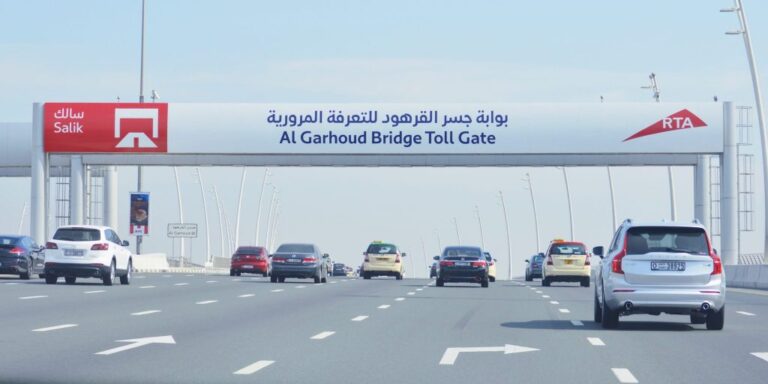
| Salik tolls (2 to 4 gates) | AED 8–24 | AED 176–528 | AED 2,112–6,336 |
| Parking in Abu Dhabi | AED 10–30 | AED 220–660 | AED 2,640–7,920 |
| Vehicle depreciation (per km) | AED 26–39 | AED 572–858 | AED 6,864–10,296 |
| Tyre and maintenance allocation | AED 8–12 | AED 176–264 | AED 2,112–3,168 |
| Total driving cost | AED 97–170 | AED 2,134–3,740 | AED 25,608–44,880 |
At estimated train prices of AED 50 to AED 75 one way (AED 100 to AED 150 return), a daily commuter using the train pays AED 2,200 to AED 3,300 per month in tickets versus AED 2,134 to AED 3,740 per month in driving costs. The financial difference is smaller than most people expect. The real saving from the train for daily commuters is time and stress, not necessarily money at the ticket prices currently estimated.
Where the financial case becomes clear is for residents who can give up a car entirely because of the train. A household that sells one car and uses Etihad Rail for the Dubai to Abu Dhabi commute saves AED 2,500 to AED 5,000 per month in car loan repayments, insurance, registration, and running costs. That is the scenario where the train changes household finances most significantly.
Current alternatives and their costs
The existing intercity bus service between Dubai and Abu Dhabi costs AED 25 one way and takes 2 hours in off-peak conditions. It is cheap but slow. Shared taxis between the two cities cost approximately AED 50 to AED 80 per person depending on the operator and run from various points. Private taxis via Careem or Uber cost AED 150 to AED 250 depending on demand and timing. The train at AED 50 to AED 75 would be competitive with shared taxis and significantly faster than either bus option.
What this means for daily commuters
Time returned to your day
A resident currently commuting from Dubai to Abu Dhabi by car spends 150 to 240 minutes per day in transit at peak hours. The train reduces that to approximately 114 minutes including the Metro connection time to Jumeirah Golf Estates station and ground transport at the Abu Dhabi end. The time saving of 36 to 126 minutes per day sounds modest until you multiply it by 250 working days. That is 150 to 525 hours per year, the equivalent of 6 to 22 extra full days returned to your life annually.
Unlike driving time, train time is productive. Onboard WiFi, laptop-friendly seating in business class, and a consistent journey time that does not vary with traffic means the commute becomes a working session. Residents who use public transport for work purposes consistently report higher job satisfaction and lower burnout than equivalent car commuters. A Reddit UAE thread specifically about the Etihad Rail announcement shows a recurring comment: the prospect of working on the train instead of staring at brake lights on Sheikh Zayed Road is the primary reason residents are excited about the service.
The last mile problem
The practical challenge for daily commuters is that neither station is centrally located. Jumeirah Golf Estates in Dubai is accessible via Metro from central Dubai but adds 20 to 40 minutes to the total journey from central areas. Mohammed Bin Zayed City in Abu Dhabi requires a taxi or bus connection to Abu Dhabi’s business districts which adds a further 20 to 30 minutes.
In Dubai, the RTA is ramping up efforts to ensure the main Etihad Rail station is served by feeder buses and taxis to allow for last mile connectivity. Until those feeder networks are fully established, residents living far from Jumeirah Golf Estates need to factor in the additional connection time when comparing total journey time to driving. The RTA journey planner is the most reliable tool for calculating the Metro connection from your area to Jumeirah Golf Estates station.
For residents who live near Jumeirah Golf Estates already, the train is almost certainly faster than driving from day one. For residents in Downtown, Marina, or DIFC, the door-to-door comparison needs individual calculation based on specific origin and destination.
The Sharjah angle: the commute that changes most
The Dubai to Abu Dhabi journey gets the headlines but the Sharjah to Dubai connection may deliver the most dramatic quality-of-life improvement per resident. The Sharjah to Dubai commute by car during peak hours takes 60 to 90 minutes in each direction. Hundreds of thousands of Sharjah residents make this journey daily because Sharjah rents are 30% to 50% lower than comparable Dubai apartments while the job market is primarily in Dubai.
A 15-minute train journey between University City in Sharjah and Jumeirah Golf Estates in Dubai changes the entire calculation. Residents who currently endure 2 to 3 hours of daily commuting to access lower Sharjah rents suddenly get to keep both the financial benefit and their time. The Sharjah rent saving of AED 20,000 to AED 40,000 per year while commuting only 30 minutes per day (15 minutes each way) is a genuinely attractive proposition that did not exist before the rail network.
The impact of lower-cost areas becoming viable due to better transport links is covered in the context of how the cost of living in Dubai compares to neighbouring emirates, where transport time has always been the hidden cost that makes cheap rent less cheap in practice.
How the rail line affects where to live and what it costs
Property near Jumeirah Golf Estates
Jumeirah Golf Estates and the surrounding areas of Dubai South, Dubai Production City, and Jebel Ali are likely to see the strongest property demand response from the rail launch. These areas were already more affordable than central Dubai and they now sit within walking or short driving distance of the UAE’s only intercity train station in Dubai. For residents weighing up where to rent, being near the Jumeirah Golf Estates station becomes a meaningful lifestyle and cost factor.
Rents in Jumeirah Golf Estates and immediate surroundings have already moved since the station location was confirmed. This is the standard property response to confirmed transport infrastructure and it mirrors what happened to property values along the Dubai Metro Red Line extension when those stations were confirmed.
Abu Dhabi residents working in Dubai
The inverse commute, Abu Dhabi residents working in Dubai, has historically been unusual because the journey time made it impractical. At 57 minutes by train from Mohammed Bin Zayed City to Jumeirah Golf Estates, the Abu Dhabi to Dubai commute becomes comparable to many within-Dubai commutes by car. Abu Dhabi rents for comparable apartments run 20% to 35% lower than Dubai for many property types. The train makes Abu Dhabi residency with Dubai employment financially viable in a way it has not been before.
The banking options available to UAE residents and the salary transfer decisions that maximise financial returns remain relevant regardless of which emirate you live in, but the where-to-live question now has a new variable that makes cross-emirate living more financially attractive for a larger group of residents.
When does it actually launch
Etihad Rail’s passenger services will start in 2026 as previously announced. The Fujairah station is fully ready while finishing touches are being applied to the Dubai and Abu Dhabi stations. The most credible expectation based on official statements is a phased launch starting with the Abu Dhabi to Dubai to Fujairah corridor in Q2 or Q3 2026, with the wider network of 11 stations coming online in phases through 2026 and into 2027.
Official ticket prices have not been fully announced yet, but reports suggest pricing may remain competitive with current intercity transport options. Booking is expected to be available through a mobile app with seat selection, digital boarding passes, and physical ticket counters at stations.
A separate high-speed rail project linking Abu Dhabi and Dubai in 30 minutes at 350 km/h is also under development with tenders issued and network designs approved, but this is a longer-term project and not part of the 2026 launch. The 2026 service is the 200 km/h network with a 57-minute Abu Dhabi to Dubai journey time.
For residents planning around the launch, the practical advice is to track Etihad Rail’s official announcements at etihadrail.ae and follow their social media channels where station opening dates and ticket pricing will be confirmed first.
For residents who are reconsidering where to live based on the Etihad Rail launch, the financial reality of moving between emirates is worth calculating carefully. The rent saving of living in Abu Dhabi or Sharjah while working in Dubai looks different once you add the train commute cost, the Metro connection time, and the last mile transport at both ends. A full breakdown of what living in Dubai actually costs month by month, including transport, is covered in the Dubai cost of living guide for 2026.