A cashback credit card can reduce the net cost of spending you were going to make anyway. In the UAE, category cashback can be valuable, but only after accounting for caps, minimum-spend rules, annual fees and excluded transactions. The challenge is that every card advertises its highest rate in the biggest font while burying the monthly cap, the minimum spend requirement, and the categories that earn almost nothing. This guide focuses on what you actually earn, not what the bank wants you to see.
This article covers cashback cards exclusively. If you are looking for travel cards, air miles, or a broader overview of all card types, read our Best Credit Cards in UAE 2026 guide instead.
Full cashback comparison table
| Card | Bank | Dining | Groceries | Fuel | Online | General | Monthly cap | Annual fee | Min salary |
|---|---|---|---|---|---|---|---|---|---|
| Mashreq Cashback | Mashreq | 5% | 1% | 0.33% | 1% | 1% | AED 1,000 | Free for life | AED 5,000 |
| ADCB 365 | ADCB | 6% | 5%* | 5%* | 1% | 1% | AED 1,000 | AED 383 (yr 2) | AED 10,000 |
| Wio Credit | Wio | 2% | 2% | 2% | 2% | 2% | AED 2,500 | Free | AED 5,000 |
| Liv Cashback+ | Liv (ENBD) | 6% | 3% | 5% | 1% | 1% | AED 200/cat | Free for life | AED 5,000 |
| FAB Cashback | FAB | 5% | 5% | 1% | 1% | 1% | AED 150/cat | AED 300 | AED 5,000 |
| HSBC Live+ | HSBC | 6% | 2% | 5% | 0.5% | 0.5% | AED 200/cat | AED 314 (yr 2) | AED 12,500 |
| Citi Cashback | Citi | 1% | 2% | 1% | 3% | 1% | No cap | AED 300 | AED 8,000 |
| CBD Super Saver | CBD | 1% | 10%* | 10%* | 1% | 1% | AED 600 | AED 420 | AED 5,000 |
| StanChart Platinum X | StanChart | 0% | 0% | 0% | 10% | 10% online | AED 400 | AED 525 | AED 5,000 |
*Rates marked with asterisks require minimum monthly spend thresholds. Verify current terms directly with the bank. Caps marked “/cat” apply per category, not total.
Best card by spending category
Instead of picking one card and hoping it covers everything, this table shows the single best card for each major spending category. Most residents get the best results from carrying two cards that cover their top two spending areas.
| Category | Best card | Rate | Cap | Runner up |
|---|---|---|---|---|
| Dining (restaurants, cafes, food delivery) | HSBC Live+ / ADCB 365 / Liv Cashback+ | 6% | AED 200/cat (HSBC, Liv) or AED 1,000 total (ADCB) | Mashreq Cashback at 5% |
| Groceries (supermarkets) | CBD Super Saver | 10% | AED 600 total | ADCB 365 / FAB Cashback at 5% |
| Fuel and Salik | CBD Super Saver | 10% | AED 600 total | ADCB 365 / Liv Cashback+ at 5% |
| Online shopping | StanChart Platinum X | 10% | AED 400 | Citi Cashback at 3% (no cap) |
| International spending | Citi Cashback | 3% (no cap) | None | Mashreq Cashback at 2% |
| School fees and education | CBD Super Saver | 10% | AED 600 total | No close second |
| Everything (flat rate) | Wio Credit | 2% | AED 2,500 | Citi Cashback at 1% (no cap) |
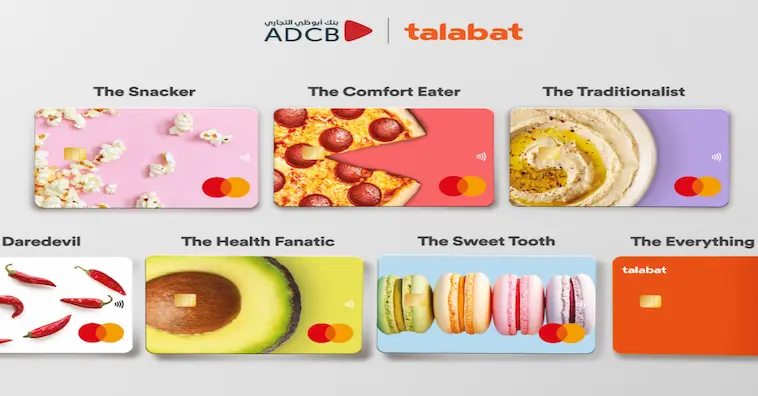
| Talabat orders | ADCB Talabat | 35% | AED 350 (10 orders) | No alternative at this rate |
Mashreq Cashback: best overall cashback card
Mashreq Cashback Credit Card
5% on dining (local and international), 2% on non AED transactions, 1% on everything else. No annual fee, ever. No salary transfer required. Minimum salary AED 5,000. Monthly cap AED 1,000.
This card wins for most people because of the combination of no fee and strong dining rates. Most UAE residents spend AED 2,000 to AED 4,000 per month on dining and food delivery. At 5%, that is AED 100 to AED 200 per month before counting anything else. Over a year, a typical user earns AED 2,400 to AED 4,000 in cashback from a card that costs nothing to hold.
The weakness is fuel and utilities at 0.33%. If you drive frequently or have high utility bills, pair this with a second card that covers those categories.
→ Best for: single card holders who dine out regularly and want zero complexity
→ Skip if: dining is a small part of your spending and you need higher rates on groceries or fuel
ADCB 365 Cashback: best for families and high spenders
ADCB 365 Cashback Credit Card
6% on dining, 5% on fuel and Salik, 5% on groceries (with minimum monthly spend), 3% on utilities and telecom, 1% on everything else. Annual fee AED 383.25 from year 2. Minimum salary AED 10,000. Monthly cap AED 1,000. Requires AED 5,000 minimum monthly spend to qualify for cashback.
The highest combined category rates in the market. A family spending AED 15,000+ per month across groceries, fuel, dining, and household expenses reliably earns AED 400 to AED 600 per month. The card also earns ADCB TouchPoints that convert to Emirates Skywards or Etihad Guest miles.
The AED 5,000 minimum spend requirement is critical. If your total monthly card spend falls below AED 5,000, you earn zero cashback for that month. This makes the ADCB 365 unsuitable for low spenders. Calculate your typical monthly card spend before applying.
→ Best for: families and high spenders with AED 10,000+ monthly card spend across multiple categories
→ Skip if: you spend less than AED 5,000 per month on card (you will earn nothing)
Wio Credit: best flat rate card
Wio Credit Card
2% on everything. No categories to track, no annual fee, no minimum spend requirement. Fully digital. Minimum salary AED 5,000. Monthly cap AED 2,500.
The appeal is total simplicity. Every dirham earns the same rate regardless of where you spend it. For someone who spends AED 8,000 per month, that is AED 160 per month or AED 1,920 per year from a free card. No categories to optimise, no minimum spend to hit, no annual fee to offset.
The AED 2,500 monthly cap means you would need to spend AED 125,000 per month to hit it. For all practical purposes, this card is uncapped.
→ Best for: anyone who does not want to think about categories or caps and wants consistent, predictable returns
→ Skip if: you spend heavily in one category (dining, fuel) where a specialist card earns 2.5x to 3x more
Liv Cashback+: best free card for high category rates
Liv Cashback+ Credit Card
6% on dining, 5% on fuel, 3% on groceries, 1% on everything else. Free for life. Minimum salary AED 5,000. Monthly cap AED 200 per category.
Liv Cashback+ offers category rates that rival the ADCB 365 but with no annual fee and a lower salary requirement. The tradeoff is the AED 200 per category cap, which limits your maximum monthly earning to roughly AED 600 to AED 800 even if you spend heavily. For moderate spenders (AED 5,000 to AED 10,000 per month), the per category caps are rarely hit and the card delivers excellent value.
→ Best for: moderate spenders (under AED 10,000 per month) who want high category rates without paying an annual fee
→ Skip if: you are a high spender who would hit the AED 200 per category caps regularly
FAB Cashback: best for groceries
FAB Cashback Credit Card
5% on dining and groceries, 1% on fuel and everything else, 3% on international. Annual fee AED 300. Minimum salary AED 5,000. Monthly cap AED 150 per category.
The FAB Cashback card is strongest when your spending is concentrated on groceries and dining. The 5% grocery rate matches the ADCB 365 without the AED 5,000 minimum monthly spend requirement. The AED 300 annual fee is waived with sufficient spend at most branches. The AED 150 per category cap limits maximum monthly earning, which makes it less suitable for very high spenders.
→ Best for: residents who spend heavily on groceries and dining but do not want a high minimum spend threshold
→ Skip if: fuel is your biggest category (FAB only offers 1% on fuel)
HSBC Live+: best for dining
HSBC Live+ Credit Card
6% on dining, 5% on fuel, 2% on groceries, 0.5% on everything else. Free year 1, AED 314 from year 2. Minimum salary AED 12,500. Monthly cap AED 200 per category. Includes free Zomato Gold membership.
The highest dining rate tied with ADCB 365 and Liv Cashback+, but the HSBC Live+ adds a free Zomato Gold subscription (2 for 1 on dining at partner restaurants) which stacks on top of the 6% cashback. For heavy diners, the combination of 6% back plus Zomato Gold discounts makes this the most rewarding dining card in the UAE. The AED 12,500 minimum salary and year 2 annual fee narrow the audience.
→ Best for: high earners (AED 12,500+) who dine out frequently and will use the Zomato Gold benefit
→ Skip if: you earn below AED 12,500 (you will not qualify) or you rarely dine out
Citi Cashback: best uncapped card
Citi Cashback Credit Card
3% on international, 2% on groceries, 1% on everything else. No monthly cap. Annual fee AED 300. Minimum salary AED 8,000.
The only major cashback card in the UAE with no monthly cashback cap. Every other card on this list limits your earning to AED 200 to AED 2,500 per month. Citi does not. For very high spenders (AED 20,000+ per month), the uncapped 1% to 3% rates can outperform cards with higher headline rates but restrictive caps. The 3% international rate with no cap makes this particularly valuable for residents who travel frequently or make international online purchases.
→ Best for: very high spenders and frequent international purchasers who would hit caps on other cards
→ Skip if: your spending is under AED 10,000 per month (lower category rates mean less reward at normal spend levels)
CBD Super Saver: best for school fees and utilities
CBD Super Saver Credit Card
10% on education, groceries, and fuel (with minimum spend). 1% on everything else. Annual fee AED 420 (free year 1). Minimum salary AED 5,000. Monthly cap AED 600.
The highest rates on education, groceries, and fuel of any card in the UAE. If you pay school fees by credit card (many UAE schools accept it), the 10% education rate on a AED 5,000 monthly school fee earns AED 500 per month, hitting the AED 600 cap almost immediately. No other card comes close for education spending. The tradeoff is a AED 420 annual fee and a minimum monthly spend requirement to activate the 10% rates.
→ Best for: parents paying school fees and anyone with very high grocery and fuel spend
→ Skip if: you do not have education expenses (the 1% rate on other categories is not competitive)
Islamic cashback cards
For residents who require Shariah compliant banking, these cards offer competitive cashback structures using Murabaha or Wakala financing instead of interest.
| Card | Bank | Top rate | Key categories | Annual fee | Min salary |
|---|---|---|---|---|---|
| Emirates Islamic Switch (Lifestyle) | Emirates Islamic | 8% | Fuel, groceries, dining, education (switchable to Travel mode) | AED 299 | AED 5,000 |
| FAB Cashback Islamic | FAB | 5% | Fuel, dining, groceries, fashion | AED 300 | AED 5,000 |
| EI Cashback Plus | Emirates Islamic | 10% | Groceries, dining, education, telecom | AED 299 | AED 5,000 |
| DIB Consumer Cashback Platinum | DIB | 4% | Groceries, fuel, utilities, education | AED 249 | AED 15,000 |
| SIB Cashback | SIB | 10% | Digital wallet and online spend | AED 199 | AED 5,000 |
| Al Hilal Cashback | Al Hilal | 5% | Choose 2 preferred categories | Free for life | AED 5,000 |
The Emirates Islamic Switch card stands out for its dual mode design. You toggle between “Lifestyle mode” (8% fuel, 4% groceries, dining, education) and “Travel mode” (4% airlines, hotels, dining) directly in the app. No other UAE card offers this flexibility.
Ecosystem and co-branded cashback cards
These cards deliver outsized returns if your spending is concentrated on a specific platform. They work best as secondary cards alongside a general cashback card.
| Card | Partner | Top rate | Cap | Annual fee |
|---|---|---|---|---|
| ADCB Talabat | Talabat | 35% on Talabat orders | AED 350/month (10 orders) | Free for life |
| ENBD noon One | noon | 20% noon Food, 10% NowNow, 5% noon | AED 2,000 | Free for life |
| FAB GEMS Titanium | GEMS Education | 4.25% off GEMS school fees | N/A | Free for life |
The ADCB Talabat card is covered in detail in our Talabat ADCB Credit Card Review. Note that a minimum monthly spend of AED 2,500 is required to qualify for the 35% rate (effective June 2025).
How much you will actually earn: 3 spending profiles
Profile 1: Family spending AED 15,000 per month (two cards)
| Category | Monthly spend | Card used | Rate | Monthly cashback |
|---|---|---|---|---|
| Dining | AED 3,500 | Mashreq Cashback | 5% | AED 175 |
| Groceries | AED 3,000 | ADCB 365 | 5% | AED 150 |
| Fuel + Salik | AED 1,500 | ADCB 365 | 5% | AED 75 |
| Utilities | AED 1,500 | ADCB 365 | 3% | AED 45 |
| Online + general | AED 5,500 | Mashreq Cashback | 1% | AED 55 |
| Total | AED 15,000 | 3.3% effective | AED 500 |
Annual return: approximately AED 6,000. Cost of cards: AED 0 (Mashreq) + AED 383 (ADCB, waivable with spend). Net: AED 5,600+ per year.
Profile 2: Single professional spending AED 7,000 per month (one card)
| Category | Monthly spend | Card used | Rate | Monthly cashback |
|---|---|---|---|---|
| Dining | AED 2,000 | Mashreq Cashback | 5% | AED 100 |
| Groceries | AED 1,200 | Mashreq Cashback | 1% | AED 12 |
| Transport | AED 800 | Mashreq Cashback | 0.33% | AED 3 |
| Online + general | AED 3,000 | Mashreq Cashback | 1% | AED 30 |
| Total | AED 7,000 | 2.1% effective | AED 145 |
Annual cashback: approximately AED 1,740 from a free card.
Profile 3: Budget conscious resident spending AED 4,000 per month (one card)
| Category | Monthly spend | Card used | Rate | Monthly cashback |
|---|---|---|---|---|
| Everything | AED 4,000 | Wio Credit | 2% flat | AED 80 |
Annual cashback: AED 960 from a free card. No categories to track, no caps to worry about.
Mistakes that wipe out your cashback
Carrying a balance. UAE credit card interest rates run between 30% and 42% APR. A AED 10,000 balance at 36% APR costs AED 300 per month in interest. One month of carrying a balance wipes out three to six months of cashback. If you cannot pay in full, do not use a credit card for that purchase.
Assuming the MCC matches the merchant name. Cashback is determined by the Merchant Category Code (MCC), not the store name. A restaurant inside a hotel may code as “lodging” and earn 0.33% instead of 5%. A supermarket coded as “general retail” may not earn grocery rates. There is no reliable way to check in advance, but checking your statement helps you identify patterns.
Ignoring the monthly cap. A card advertising 10% cashback with a AED 200 monthly cap delivers only 2% effective on AED 10,000 monthly spend in that category. Always calculate your realistic cashback after caps, not before.
Missing the minimum spend requirement. ADCB 365 requires AED 5,000 monthly spend. Talabat card requires AED 2,500. Below these thresholds, your cashback drops to near zero. If your spending does not consistently reach the threshold, choose a card without one.
Using a cashback card abroad without checking FX fees. Most UAE cashback cards charge 2% to 3% on foreign currency transactions. On a AED 5,000 purchase abroad, the FX fee costs AED 100 to AED 150, which erases any cashback earned. Use a dedicated travel card for international spending.
This guide is being re-verified against current issuer terms in September 2026. Cashback rates, caps, and conditions change without notice. Always verify current terms directly with the issuing bank before applying. MoneySaverWorld is not a licensed financial advisor. This content is educational and does not constitute personalised financial advice.
Cashback is only one angle on UAE credit cards, and the wider comparison across cashback, travel and air miles cards sits on the credit cards page.