Getting a UAE residency visa is one of the first financial decisions every resident and investor has to make, and the right route depends entirely on your situation, not on which visa sounds the most impressive. A tech professional earning AED 30,000 a month, a retiree with AED 1 million in savings, and a property buyer with a AED 400,000 studio all qualify for genuinely different visas with different costs, durations, and family sponsorship rights. This guide breaks down every UAE residency route in one place so you can work out which one actually fits you.

On this page

Route Duration Who it suits
Golden Visa 10 years, renewable Investors, high earners, entrepreneurs, standout students
2-year property visa 2 years, renewable Any freehold property owner, no minimum value for sole owners
Retirement visa 5 years, renewable Residents 55+ with qualifying income, savings, or property
Family visit visa 30 or 60 days, extendable Hosting relatives, kids under 18 travel free
Green Visa / Remote Visa 1 to 5 years Freelancers, remote employees, self-employed professionals

1. UAE Golden Visa: every route, cost and benefit

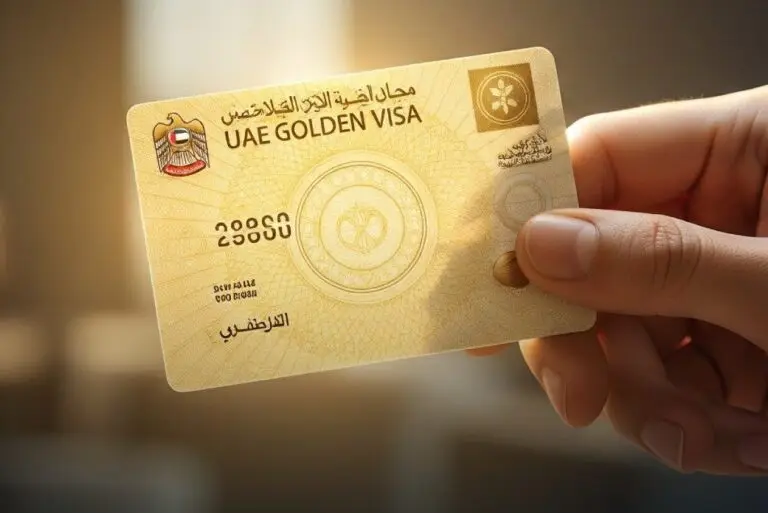
The Golden Visa is a 10-year renewable residency permit that needs no employer sponsor and survives job loss, career changes, and extended time abroad. It now covers 15 qualifying categories, from the well-known routes (AED 2 million in property, or a basic salary of AED 30,000 a month for 2 years) to newer additions like content creators, educators, and long-serving nurses. Government fees run from around AED 2,500 for most categories up to AED 9,884.75 for the property investor route through the Dubai Land Department. Holders can sponsor parents, unlimited domestic staff, and children of any age, and are exempt from the standard 180-day absence rule that cancels ordinary residence visas.

Each of the 15 categories carries its own fee schedule, and small paperwork mistakes are what typically get Golden Visa applications rejected.

2. Property visas: 2 year, 5 year, and 10 year routes

Buying property in Dubai unlocks three different visas depending on value. As of April 2026, sole owners of any freehold property qualify for a 2-year renewable investor visa with no minimum value at all, which means a studio apartment now qualifies. Joint owners still need AED 400,000 in equity each. Reaching AED 2 million in property (single property or a portfolio) opens the door to the 10-year Golden Visa instead, while a fully paid property worth AED 1 million supports the separate 5-year retirement visa for residents 55 and over. Mortgaged properties are treated differently across the three routes, which is the detail that trips up most applicants.

Mortgages are treated differently under each route, and the required documents change accordingly, both laid out on the Dubai property visa page.

3. Retirement: a UAE residency visa for over-55s

Residents aged 55 and above with at least 15 years of work experience can apply for a 5-year renewable retirement visa without needing an employer or family sponsor. Eligibility runs through one of several financial tests: a qualifying annual income, a fixed-term savings deposit, or property ownership, and combinations of the two are also accepted. Retirement visa holders can sponsor a spouse and children with no numerical limit, and can sponsor parents on a separate renewable one-year visa.

The exact income, savings, and property thresholds for each route, plus the documents required, are detailed on the retirement visa page.

4. Family visit visa (free for kids)

The family visit visa lets residents and citizens bring relatives to the UAE for a 30 or 60 day stay, extendable up to 120 days without leaving the country. Its standout feature is that children under 18 travel visa-free when the whole family applies together, with parents only covering the usual visa charges plus a smaller service and insurance fee per child. There is no cap on how many children can be included, and single parents qualify on the same terms.

The exact costs, application steps, and extension rules are covered on the family visit visa page.

5. Self-sponsored visas without a job

Not every UAE residency route requires an employer. Beyond the Golden Visa, property visa, and retirement visa, the UAE offers a Green Visa for freelancers, investors, and skilled professionals in specific occupational levels, valid for 5 years without a sponsor, and a Remote Work Visa for people who want to live in the UAE for up to a year while keeping their job abroad. Each has its own income threshold and required documents, and none of them ties your residency to a single employer.

Costs and eligibility for each of the 5 routes are compared on the self-sponsored visas page.

6. ICP Smart Services: the portal behind it all

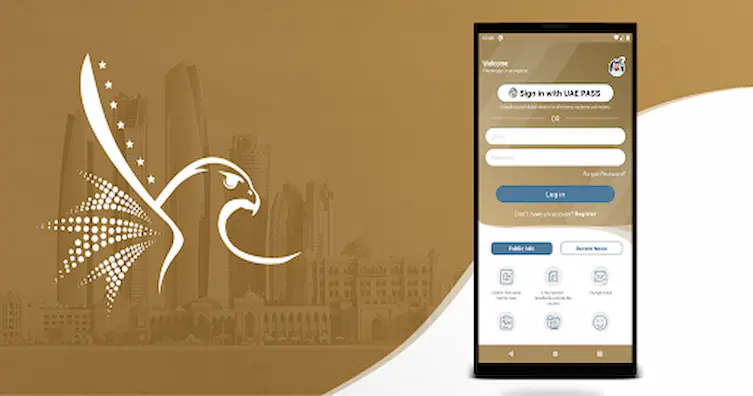
Whichever visa route applies to you, most of the paperwork now runs through one of two government platforms. ICP Smart Services handles residency and Emirates ID services for every emirate except Dubai’s visa system specifically (Dubai routes through GDRFA instead, though Emirates ID for all 7 emirates goes through ICP). As of 2026, UAE Pass is mandatory to log in, and routine services like Emirates ID renewal are typically processed within 48 hours entirely online.

Registering, checking fines, and applying for a Golden Visa through the portal are all covered on the ICP Smart Services page.

7. Trade licenses: the business route to residency

Starting a business is another path into UAE residency, since a registered company can qualify its owner for an investor or entrepreneur visa. Free zone trade licenses are the most accessible entry point, with costs varying significantly by zone, from roughly AED 4,000 in Sharjah Media City to over AED 12,000 in JAFZA, depending on the activity, visa allowance, and office requirement bundled in.

Costs and what’s included vary significantly by zone, which is compared in detail on the trade license page.

Whichever UAE residency visa route fits your situation, always confirm the current fees and thresholds directly with GDRFA, ICP, or the DLD before applying, since these rules have shifted more than once in the past year.