Dubai has a reputation for being expensive and it earns it. Rent is high, dining out adds up fast, and the lifestyle is engineered to make spending feel effortless. But the tax-free salary that brings most people here is also the single biggest financial advantage available anywhere in the world. A resident earning AED 15,000 per month takes home every dirham. The equivalent gross salary in the UK or Australia after income tax is 25% to 35% less. The question is not whether you can afford to save in Dubai. The question is whether you are making the right choices across the categories where Dubai residents consistently overspend. These are the ones that move the needle.
Banking: the savings gap most residents ignore
The average UAE current account pays 0.25% interest or less. Several savings accounts available right now pay 4.00% to 6.25% with no lock-in and no minimum balance requirements. A resident with AED 30,000 in a current account is leaving between AED 1,125 and AED 1,875 per year in uncollected interest. Over three years that is AED 3,375 to AED 5,625 of money that was always available to them and never claimed.
This is the highest-return, lowest-effort saving move available to any UAE resident regardless of income level. It requires opening a second account, moving your savings balance into it, and doing nothing else. The FAB iSave account currently pays 4.00% per annum with no salary requirement and no conditions. The Mashreq NEO Plus pays 6.25% per annum for salary transfers of AED 5,000 or more.The full comparison of every UAE savings account with verified 2026 rates covers every option side by side.
A consistent observation in r/dubai personal finance threads is that residents who have lived in Dubai for 3 to 5 years and never moved their savings out of a current account are the most surprised when they calculate what they have lost. The opportunity cost of doing nothing with savings in Dubai is higher than almost anywhere else in the world precisely because the available rates are so much better than the default.
The salary transfer bonus you only get once
UAE banks pay AED 500 to AED 7,000 in joining bonuses to new customers who transfer their salary. This bonus is available exactly once, when you first join. Once you are an existing customer you cannot claim it again from the same bank. Most residents discover this offer exists only after they have already set up their salary account with whichever bank their employer defaulted to on their first day.
If you have not yet claimed a salary transfer joining bonus or if you joined your current bank before these offers became widely available, switching your salary account now is worth doing. The joining bonus alone, combined with the higher savings rate on a better account, represents AED 3,000 to AED 10,000 of first-year financial value that requires one afternoon of paperwork to access. Current offers with side-by-side first-year value calculations are in the best salary transfer offers UAE 2026 guide.
Transport: cutting the biggest daily cost
The real cost of car ownership in Dubai
A car in Dubai costs more than the monthly payment. Insurance, registration, Salik tolls, petrol, parking, and maintenance add AED 1,500 to AED 3,000 per month on top of the loan repayment for a mid-range vehicle. Many Dubai residents who calculate their full monthly car cost for the first time discover it is their second largest expense after rent.
For residents whose work location and schedule allow Metro use, the financial case for going car-free or car-light is significant. A monthly Metro and bus pass costs AED 350 for an unlimited rides Nol Silver card. The equivalent car cost is typically AED 3,000 to AED 5,000 per month. The saving of AED 2,650 to AED 4,650 per month is AED 31,800 to AED 55,800 per year. Not every resident’s situation allows this, but for those who work along the Red or Green Line the option is worth an honest evaluation.
Salik fines and the discount window
Salik fines for insufficient balance are AED 50 per missed toll plus the original toll amount. Keeping a minimum AED 100 balance on your Salik account prevents fines entirely. Set up auto top-up on the Salik app and eliminate this as a cost category. Traffic fines in Dubai also have discount windows — typically 50% off within the first 30 days of issuance. Full discount schedule in the UAE traffic fines discount guide.
Petrol station rewards
If you drive regularly, ADNOC Rewards and Yes Rewards by ENOC are two loyalty programmes that pay you back on every fill-up. Both reward fuel purchases, convenience store spending, and car washes with points redeemable for discounts, retail vouchers, and fuel perks. For commuters who fill up weekly, these programmes accumulate meaningful value over a year with zero change in behaviour required beyond registering and scanning at the pump.
Taxis and ride hailing
Careem and Uber have surge pricing during peak hours. A taxi from Deira to Dubai Marina at 6pm on a weekday costs AED 45 to AED 60. The same journey on the Metro costs AED 5 with a Nol card. For regular commuters the Metro saving across a working month is AED 1,200 to AED 2,400.
Reserve taxis for journeys where public transport is genuinely impractical rather than merely less convenient.
Food: the single biggest monthly variable
Grocery shopping
The price difference between supermarket chains in Dubai is significant and consistently underestimated by residents. A weekly grocery shop at Lulu Hypermarket or Carrefour for the same basket of items costs 15% to 25% less than the same shop at Waitrose, Spinneys, or West Zone. On an AED 800 weekly grocery spend that is AED 120 to AED 200 per week or AED 6,240 to AED 10,400 per year saved from one change of supermarket. Lulu has the strongest pricing on staples including rice, chicken, lentils, eggs, bread, and produce. West Zone has better imported goods if that is a specific requirement.
Near-expiry produce and meat are sold at 30% to 70% discount at most hypermarkets. The stickers appear in the morning before opening and sell quickly. Shopping in the morning rather than the evening gives access to these reductions before they are gone.
Dining out without the premium
Dubai has two dining economies running simultaneously. The visible one is the Marina and Downtown restaurant scene where a main course costs AED 80 to AED 180 and a brunch costs AED 250 to AED 500 per person. The parallel economy is the Karama, Satwa, Al Nahda, and Deira restaurant scene where a full meal costs AED 15 to AED 40 and the quality is consistently high. South Asian, Filipino, Pakistani, and East African restaurants in these areas serve food that Dubai food writers regularly cite as the city’s best value. A family meal for four people in Karama costs AED 80 to AED 150. The same meal in JBR costs AED 600 to AED 1,000.
The Entertainer app (AED 299 to AED 499 per year) gives buy-one-get-one-free at hundreds of restaurants across the UAE. On two dinner outings per month at mid-range restaurants it pays for itself. On four outings it saves AED 800 to AED 1,200 per year beyond the subscription cost.
Food delivery apps
Talabat, Noon Food, and Deliveroo add a delivery fee, service fee, and small order fee that cumulatively adds AED 10 to AED 25 to every order. On a AED 40 meal that is a 25% to 60% premium for convenience. Daily food delivery ordering is one of the fastest ways to increase monthly food spending without noticing it happening. Treat delivery as a once or twice weekly reward rather than a daily convenience and the monthly saving is AED 300 to AED 600 without any reduction in quality of life.
Shopping smarter in Dubai
Dubai Shopping Festival and seasonal sales
Dubai Shopping Festival (typically January to February) offers genuine discounts of 30% to 70% at participating retailers including electronics, fashion, and homeware. Residents who time major purchases — furniture, electronics, clothing — to DSF rather than buying on impulse throughout the year save AED 500 to AED 5,000 depending on what they are buying. The same logic applies to the back-to-school sales in August and September and Black Friday in November which has become a major retail event in UAE malls.
Dubai Outlet Mall
Dubai Outlet Mall in Al Ain Road carries branded fashion, homeware, and electronics at 30% to 90% below retail price. Residents who shop there rather than at Dubai Mall or Mall of the Emirates for branded items consistently report saving AED 200 to AED 600 per shopping trip on equivalent purchases. The journey takes 30 minutes from central Dubai.
Online shopping and customs
Items ordered internationally above AED 300 in value are subject to UAE customs duty of 5% plus VAT. Orders below AED 300 are duty-free. Splitting larger international orders into multiple smaller deliveries legally avoids the duty threshold. Amazon.ae and Noon.com offer competitive pricing on most categories without the customs complication and with free delivery above AED 100 on Amazon Prime (AED 65 per year).
Discount and rewards apps worth having
Dubai has more discount and rewards app coverage than almost any other city in the world. Most residents use one or two inconsistently. Using three or four strategically reduces monthly spending by AED 300 to AED 800 without changing what you do.
The Entertainer: Buy-one-get-one-free across thousands of restaurants, hotels, spas, and attractions. AED 299 to AED 499 per year. The Dubai-only membership covers over 10,000 offers. Pays for itself in one or two uses at a mid-range restaurant. One of the most widely used apps among Dubai residents for good reason.
Smiles by e&: A rewards app that earns points on food orders, groceries, home services, dining, shopping, and travel. What makes Smiles genuinely useful is that points cross over into Majid Al Futtaim’s SHARE rewards programme, which means you can redeem at Carrefour, VOX Cinemas, Magic Planet, and major malls. Free to download and use. Stack Smiles with your Carrefour grocery shop for compounding loyalty returns.
Platable: Dubai’s surplus food app. Restaurants and cafes list end-of-service surplus as mystery boxes at up to 60% off. Free for consumers. Over 200 active partners. Particularly useful in the evenings when restaurants list same-day surplus before closing.
Careem Dine Out: Many residents have Careem only for taxis. The Dine Out section inside the Careem app offers brunch deals, buffet offers, tasting menus, and walk-in restaurant discounts searchable by location. No separate download required if you already use Careem.
Cobone and Groupon UAE: Deals on dining, beauty salons, hotels, healthcare, and activities. Most useful for one-off experiences at significantly reduced prices rather than daily use.
Entertainment without the premium
Free and low-cost activities in Dubai
Dubai has a widely underused free activities ecosystem. Dubai Frame entry is AED 50. Al Fahidi Historical Neighbourhood is free. The Dubai Water Canal and Creek waterfront walks cost nothing. Kite Beach and JBR Beach are free. The Dubai Fountain show runs every evening and is free from the waterfront. La Mer beach access is free. Cycling tracks at Al Qudra Lake and Nad Al Sheba are free. Most Dubai residents who complain that the city is expensive are paying for experiences that have free or AED 10 to AED 50 equivalents within 20 minutes of wherever they live.
VOX Cinemas pricing strategy
VOX Cinemas tickets cost AED 45 to AED 55 for standard screenings at peak times. The same seat at off-peak weekday morning and afternoon screenings costs AED 25 to AED 35. A family of four watching a film at off-peak timing saves AED 80 to AED 100 per cinema trip. VOX loyalty members also receive a free birthday ticket — register your birthdate in the VOX app at least 30 days before your birthday. Birthday freebies across Dubai restaurants, cafes, and entertainment venues are documented in the Dubai birthday freebies guide.
Streaming versus satellite TV
A full satellite TV package in Dubai costs AED 200 to AED 350 per month. Netflix, Shahid VIP, and OSN Plus together cost AED 100 to AED 150 per month and cover the vast majority of content UAE residents actually watch. The AED 100 to AED 200 monthly saving is AED 1,200 to AED 2,400 per year from one decision.
Utilities and home costs
DEWA and cooling costs
DEWA bills in Dubai are the utility cost most residents feel but few actively manage. District cooling — the air conditioning system in most Dubai apartment buildings — is billed separately from DEWA and represents a significant portion of the total utility cost. The single most impactful way to reduce DEWA and cooling costs is setting the air conditioning to 24 degrees rather than 18 to 20 degrees. Every degree lower increases cooling energy consumption by approximately 6% to 8%. A resident who shifts from 20 to 24 degrees reduces their cooling bill by 24% to 32% with no impact on comfort after the first week of adjustment.
Switching off all appliances at the wall rather than leaving on standby reduces the average Dubai apartment’s DEWA bill by 5% to 8%. This is a small absolute saving but requires no cost or effort to implement.
Home internet
Du home internet starts from AED 160 per month for 500Mbps, significantly below eLife’s starting price of AED 250 per month for comparable speeds. If your building has du infrastructure available and you are currently on eLife, switching saves AED 90 per month or AED 1,080 per year for identical practical internet performance. Check du.ae to confirm availability in your building before assuming your current provider is the only option.
Sending money home cheaper
UAE banks charge an exchange rate markup of 2% to 4% on international transfers on top of a flat transfer fee. On a monthly remittance of AED 3,000 a 3% markup costs AED 90 per month or AED 1,080 per year in unnecessary exchange rate losses. Wise, Al Ansari Exchange, and UAE Exchange consistently offer exchange rates 1% to 2.5% better than bank rates on the most common UAE remittance corridors: India, Philippines, Pakistan, Egypt, Bangladesh, and Sri Lanka. On AED 3,000 per month that saves AED 360 to AED 900 per year from one change of transfer method.
Al Ansari Exchange has branches across Dubai and processes cash transfers immediately. Wise transfers typically arrive within 1 to 2 working days. Both are significantly cheaper than UAE bank international wire transfers for personal remittances.
Loyalty programmes worth using in Dubai
Dubai has one of the densest loyalty programme ecosystems in the world. Most residents use one or two programmes inconsistently and leave significant value unclaimed.
Smiles (e& and Carrefour): Points earned on Carrefour purchases and e& mobile bills are redeemable for Carrefour groceries, Etisalat bill payments, and partner brand vouchers. For residents shopping at Carrefour weekly this generates AED 50 to AED 150 in redeemable value per month.
Emirates Skywards: Every dirham spent on Emirates credit cards, Emirates flights, and Skywards partners earns miles. UAE residents who travel home annually can accumulate enough miles for a free upgrade or a discounted ticket within 18 to 24 months of active earning. The Emirates NBD Skywards credit card earns miles on everyday UAE spending including supermarkets and dining.
Marriott Bonvoy: UAE has more Marriott properties per capita than almost any market globally. Residents who have staycations or celebrate occasions at Marriott properties accumulate points toward free nights. Marriott Bonvoy also deposits bonus points into members’ accounts on their birthday month. Register at marriott.com.
Esaad card: Available to UAE government employees and Golden Visa holders. Provides discounts at over 7,000 businesses across the UAE and in 92 countries. If you qualify, activate it through the Esaad app immediately.
The one mindset shift that changes everything
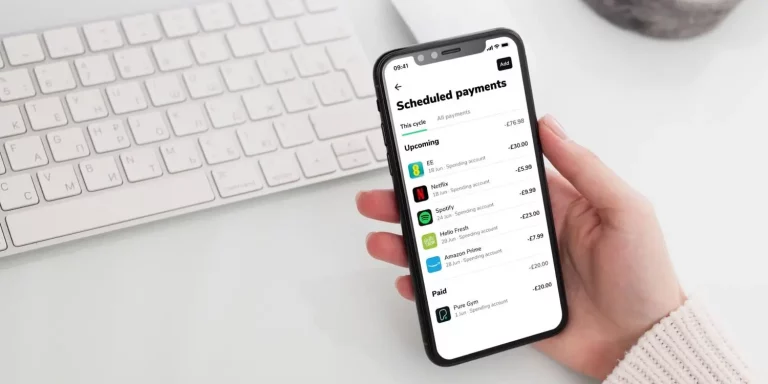
Every saving strategy in this article works better when combined with one specific habit: tracking where your money actually goes rather than where you think it goes. Most Dubai residents who overspend have a mental model of their spending that is 20% to 30% off from reality. They know they spend on rent, transport, and food. They underestimate dining delivery, impulse purchases, and the cumulative cost of convenience decisions.
Tracking every dirham for one month, using a spreadsheet, a notes app, or a budgeting app like YNAB or Spendee — consistently produces a clear picture of two or three categories where spending is significantly higher than expected. Those are the categories where the changes in this article have the most impact. Without tracking, saving advice is generic. With tracking it becomes targeted.
A practical approach that works for UAE residents: open a zero balance savings account with Mbank or Liv. Set up an automatic transfer of 10% of your salary into it on the day salary arrives. Do this before anything else is spent. After three months the savings balance is visible, real, and psychologically real in a way that a vague intention to save never is.